2.1 Early Agents Based on Symbols and Logic
Early explorations in the field of artificial intelligence were deeply influenced by mathematical logic and fundamental principles of computer science. In that era, researchers generally held a belief: human intelligence, especially logical reasoning ability, could be captured and reproduced by formalized symbolic systems. This core idea gave birth to the first important paradigm of artificial intelligence—Symbolicism, also known as "Logic AI" or "Traditional AI."
In the view of symbolicism, the core of intelligent behavior is operating on symbols based on a set of explicit rules. Therefore, an agent can be viewed as a physical symbol system: it represents the external world through internal symbols and plans actions through logical reasoning. The "wisdom" of agents in this era came entirely from knowledge bases and reasoning rules pre-coded by designers, rather than acquired through autonomous learning.
2.1.1 Physical Symbol System Hypothesis
The theoretical foundation of the symbolicism era was the Physical Symbol System Hypothesis (PSSH)<sup>[1]</sup>, jointly proposed by Allen Newell and Herbert A. Simon in 1976. These two Turing Award winners provided theoretical guidance and criteria for implementing general artificial intelligence on computers through this hypothesis.
The hypothesis contains two core assertions:
- Sufficiency Assertion: Any physical symbol system has sufficient means to produce general intelligent behavior.
- Necessity Assertion: Any system capable of exhibiting general intelligent behavior must essentially be a physical symbol system.
A physical symbol system here refers to a system that can exist in the physical world, composed of a set of distinguishable symbols and a series of processes that operate on these symbols, with constituent elements as shown in Figure 2.2. These symbols can be combined into more complex structures (such as expressions), while processes can create, modify, copy, and destroy these symbol structures.
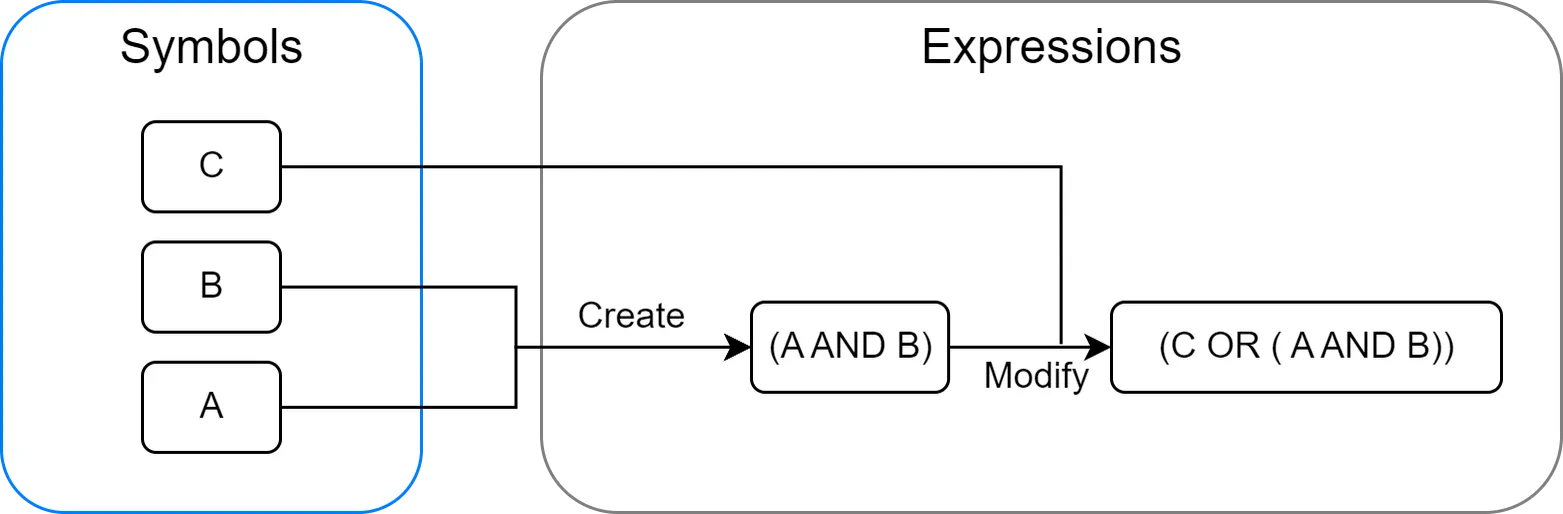
Figure 2.2 Constituent elements of a physical symbol system
In short, PSSH boldly declared: The essence of intelligence is the computation and processing of symbols.
This hypothesis had far-reaching influence. It transformed the study of the vague and complex philosophical problem of human mind into a concrete problem that could be engineered and implemented on computers. It instilled strong confidence in early artificial intelligence researchers that as long as we could find the right way to represent knowledge and design effective reasoning algorithms, we could definitely create machine intelligence comparable to humans. Almost all research in the symbolicism era, from expert systems to automated planning, was conducted under the guidance of this hypothesis.
2.1.2 Expert Systems
Under the direct influence of the physical symbol system hypothesis, Expert Systems became the most important and successful application achievement of the symbolicism era. The core goal of expert systems was to simulate the ability of human experts to solve problems in specific domains. By encoding expert knowledge and experience into computer programs, they could provide conclusions or recommendations comparable to or even surpassing human experts when facing similar problems.
A typical expert system usually consists of several core components including a knowledge base, inference engine, and user interface, with a general architecture as shown in Figure 2.3.
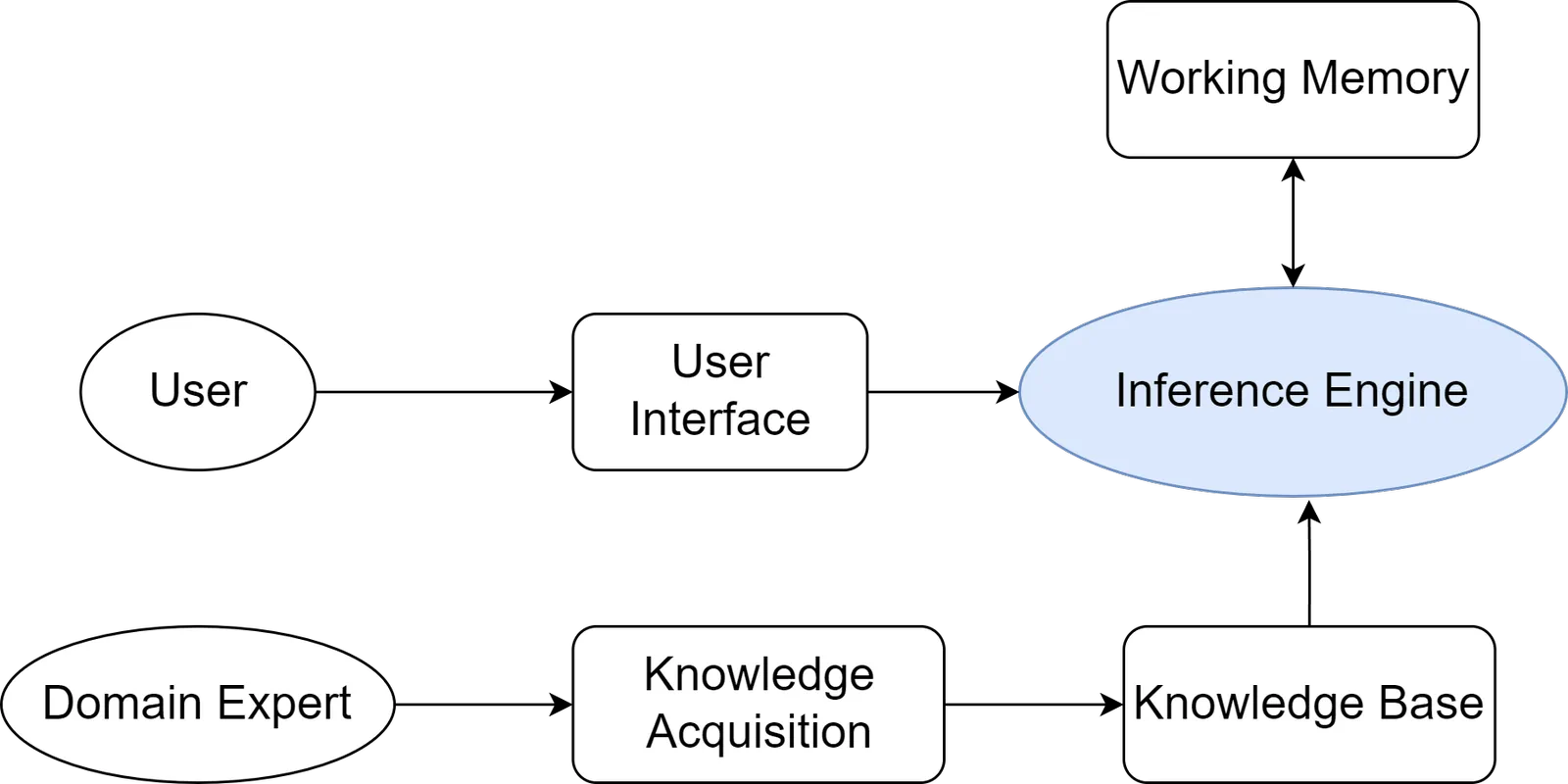
Figure 2.3 General architecture of expert systems
This architecture clearly embodies the design philosophy of separating knowledge from reasoning, an important characteristic of symbolicism AI.
Knowledge Base and Inference Engine
The "intelligence" of expert systems mainly comes from its two core components: the knowledge base and the inference engine.
- Knowledge Base: This is the knowledge storage center of the expert system, used to store domain expert knowledge and experience. Knowledge Representation is key to building a knowledge base. In expert systems, the most commonly used knowledge representation method is Production Rules, i.e., a series of conditional statements in "IF-THEN" form. For example: IF patient has fever symptoms AND cough THEN may have respiratory infection. These rules associate specific situations (IF part, conditions) with corresponding conclusions or actions (THEN part, conclusions). A complex expert system may contain hundreds or thousands of such rules, collectively forming a vast knowledge network.
- Inference Engine: The inference engine is the core computational engine of the expert system. It is a general program whose task is to find and apply relevant rules in the knowledge base based on facts provided by users, thereby deriving new conclusions. The inference engine mainly works in two ways:
- Forward Chaining: Starting from known facts, continuously matching the IF parts of rules, triggering THEN part conclusions, and adding new conclusions to the fact base until finally deriving the goal or no new rules can be matched. This is a "data-driven" reasoning approach.
- Backward Chaining: Starting from a hypothetical goal (such as "does the patient have pneumonia"), finding rules that can derive that goal, then taking the IF part of that rule as a new sub-goal, recursing in this way until all sub-goals can be proven by known facts. This is a "goal-driven" reasoning approach.
Application Case and Analysis: MYCIN System
MYCIN is one of the most famous and influential expert systems in history, developed by Stanford University in the 1970s<sup>[2]</sup>. It was designed to assist doctors in diagnosing bacterial blood infections and recommending appropriate antibiotic treatment plans.
Working Principle: MYCIN collected patient symptoms, medical history, and test results through question-and-answer interactions with doctors. Its knowledge base contained about 600 "IF-THEN" rules provided by medical experts. The inference engine mainly worked in backward chaining: starting from the highest goal of "determining the pathogen," it backward-derived what evidence and conditions were needed, then asked doctors questions to obtain this information. Its simplified workflow is shown in Figure 2.4.
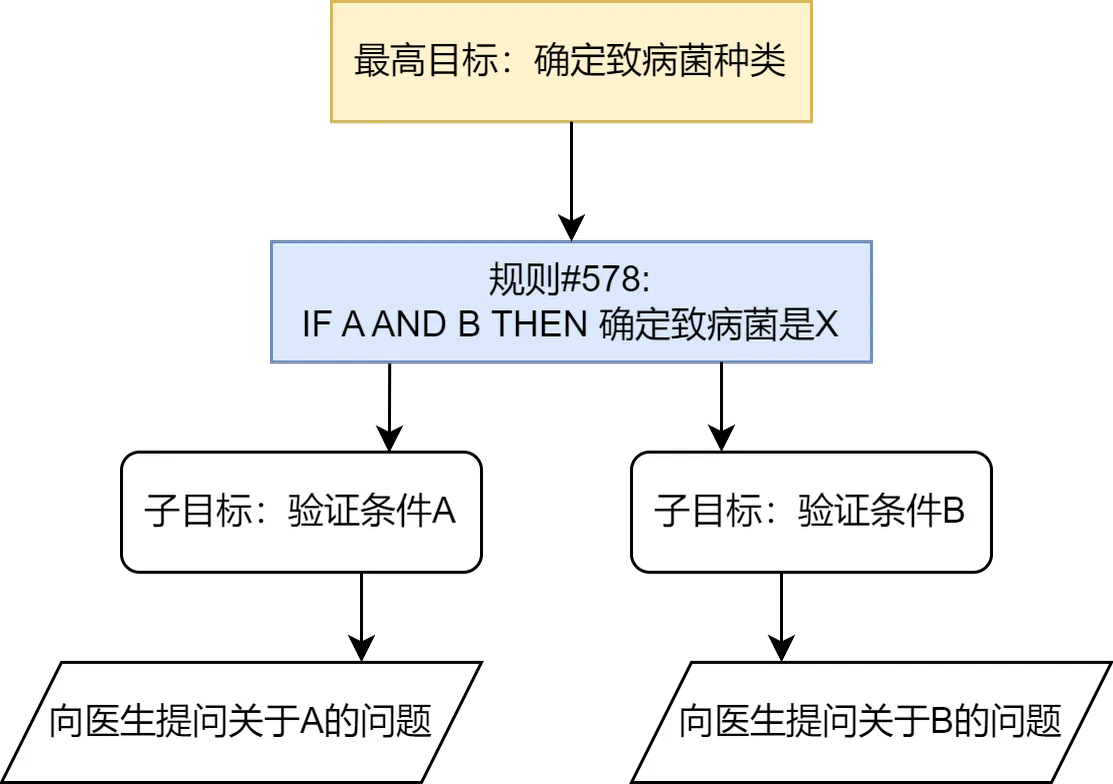
Figure 2.4 Schematic diagram of MYCIN backward chaining reasoning process
Uncertainty Handling: Medical diagnosis is full of uncertainty. An important innovation of MYCIN was introducing the concept of Certainty Factor (CF), using a numerical value between -1 and 1 to represent the credibility of a conclusion. This enabled the system to handle uncertain, ambiguous medical knowledge and provide diagnostic results with credibility assessments, which was closer to the real world than simple Boolean logic.
Achievements and Significance: In an evaluation, MYCIN's performance in blood infection diagnosis exceeded that of non-specialist doctors and even reached the level of human experts. Its success eloquently proved the validity of the physical symbol system hypothesis: through careful knowledge engineering and symbolic reasoning, machines could indeed exhibit excellent "intelligence" in highly complex professional domains. MYCIN was not only a milestone in the development history of expert systems but also paved the way for subsequent commercial applications of artificial intelligence in various vertical domains.
2.1.3 SHRDLU
If expert systems demonstrated the "depth" of symbolic AI in professional domains, then the SHRDLU project<sup>[3]</sup> developed by Terry Winograd from 1968-1970 achieved a revolutionary breakthrough in "breadth." As shown in Figure 2.5, SHRDLU aimed to build a comprehensive intelligent agent that could interact fluently with humans through natural language in the micro-environment of the "blocks world." The "blocks world" is a simulated three-dimensional virtual space containing blocks of different shapes, colors, and sizes, as well as a virtual robotic arm that can grasp and move them. Users issue commands or ask questions to SHRDLU in natural language, and SHRDLU executes actions in the virtual world or provides text responses.
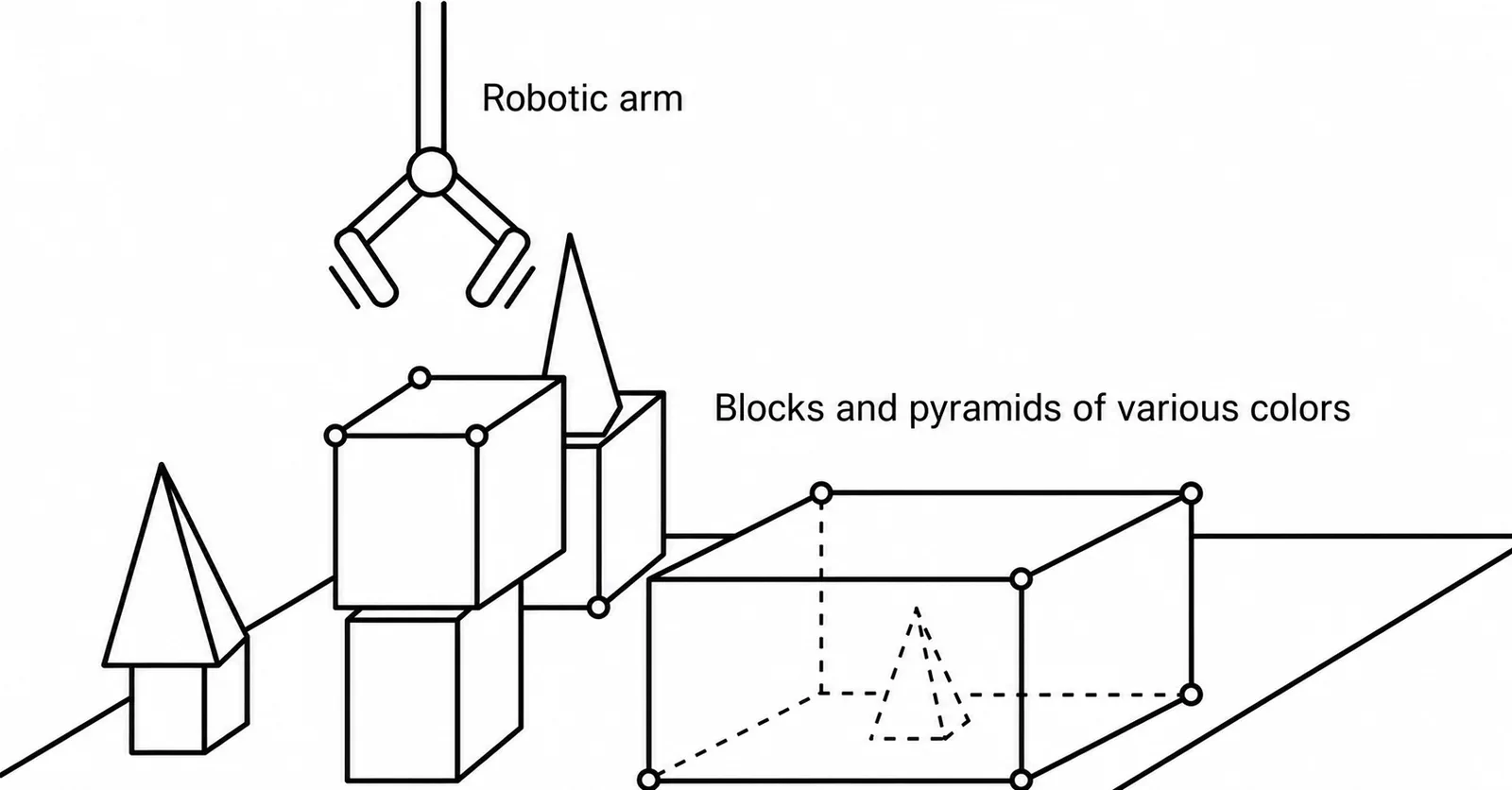
Figure 2.5 SHRDLU's "blocks world" interaction interface
SHRDLU attracted widespread attention at the time mainly because it was the first to integrate multiple independent artificial intelligence modules (such as language parsing, planning, memory) into a unified system and make them work collaboratively:
- Natural Language Understanding: SHRDLU could parse structurally complex and ambiguous English sentences. It could not only understand direct commands (such as
Pick up a big red block.) but also handle more complex instructions, such as:- Reference resolution:
Find a block which is taller than the one you are holding and put it into the box.In this instruction, the system needs to understand thatthe one you are holdingrefers to the object currently grasped by the robotic arm. - Contextual memory: Users could say
Grasp the pyramid., then askWhat does the box contain?, and the system could answer by connecting the context.
- Reference resolution:
- Planning and Action: After understanding instructions, SHRDLU could autonomously plan a series of necessary actions to complete tasks. For example, if the instruction was "put the blue block on the red block," and there was already another green block on the red block, the system would plan the action sequence of "first move the green block away, then put the blue block on."
- Memory and Q&A: SHRDLU had memory about its environment and its own behavior. Users could ask questions about this, such as:
- Inquiring about world state:
Is there a large block behind a pyramid? - Inquiring about behavior history:
Did you touch any pyramid before you put the green one on the little cube? - Inquiring about behavior motivation:
Why did you pick up the red block?SHRDLU could answer:BECAUSE YOU ASKED ME TO.
- Inquiring about world state:
SHRDLU's historical status and influence are mainly reflected in three aspects:
- Paradigm of Comprehensive Intelligence: Before SHRDLU, AI research mostly focused on single functions. It was the first to integrate multiple AI modules such as language understanding, reasoning planning, and action memory into a unified system. Its "perceive-think-act" closed-loop design laid the foundation for modern agent research.
- Popularization of Micro-World Research Methods: Its success proved the feasibility of exploring and verifying basic principles of complex agents in a simplified environment with clear rules, a method that profoundly influenced subsequent robotics and AI planning research.
- Optimism and Reflection Triggered: SHRDLU's success sparked early optimistic expectations for AGI, but its capabilities were strictly limited to the blocks world. This limitation triggered long-term speculation in the AI field about the difference between "symbol processing" and "true understanding," revealing deep challenges on the path to general intelligence.
2.1.4 Fundamental Challenges Facing Symbolicism
Despite significant achievements in early projects, starting from the 1980s, symbolic AI encountered fundamental difficulties inherent in its methodology when moving from "micro-worlds" to the open, complex real world. These difficulties can mainly be summarized into two major categories:
(1) Common-sense Knowledge and Knowledge Acquisition Bottleneck
The "intelligence" of symbolic agents depends entirely on the quality and completeness of their knowledge bases. However, how to build a knowledge base that can support real-world interaction has proven to be an extremely arduous task, mainly reflected in two aspects:
- Knowledge Acquisition Bottleneck: The knowledge of expert systems needs to be constructed by human experts and knowledge engineers through tedious processes of interviews, refinement, and encoding. This process is costly, time-consuming, and difficult to scale. More importantly, much of human expert knowledge is implicit and intuitive, difficult to be clearly expressed as "IF-THEN" rules. Attempting to manually symbolize all knowledge of the entire world is considered an almost impossible task.
- Common-sense Problem: Human behavior relies on a vast background of common sense (for example, "water is wet," "ropes can pull but not push"), but symbolic systems know nothing about this unless explicitly encoded. Establishing a complete knowledge base for broad, vague common sense remains a major challenge to this day. The Cyc project<sup>[4]</sup>, after decades of effort, still has very limited results and applications.
(2) Frame Problem and System Brittleness
In addition to knowledge-level challenges, symbolicism also encountered logical dilemmas when dealing with a dynamically changing world.
- Frame Problem: In a dynamic world, how to efficiently determine what things have not changed after an agent executes an action is a logical puzzle<sup>[5]</sup>. Explicitly declaring all invariant states for each action is computationally infeasible, yet humans can effortlessly ignore irrelevant changes.
- Brittleness: Symbolic systems rely entirely on preset rules, making their behavior very "brittle." Once encountering any minor change or new situation outside the rules, the system may completely fail, unable to adapt flexibly like humans. SHRDLU's success was precisely because it operated in a closed world with complete rules, while the real world is full of exceptions.